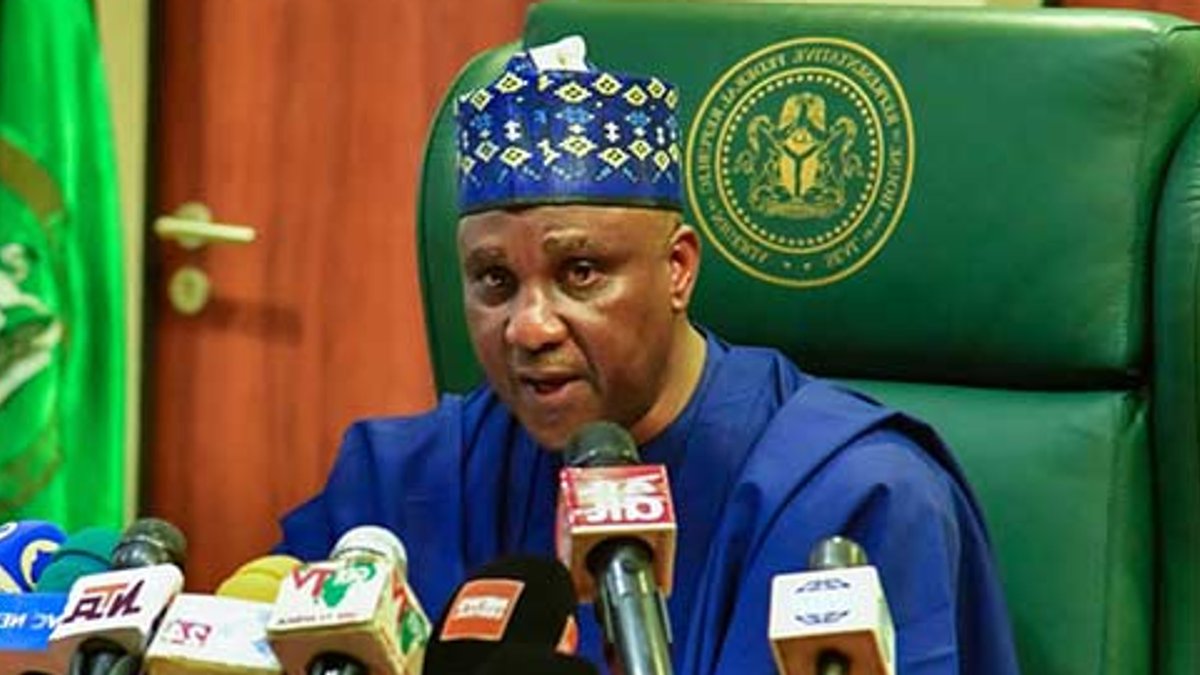
The Speaker of the House of Representatives, Tajudeen Abbas, has dissolved all ad hoc committees of the House, including the panel investigating the controversy surrounding the inclusion of the Presidential Foreign Intervention Promotion Council (PFIPC) in the 2026 Appropriation Act.
The dissolution affects the PFIPC Ad Hoc Committee chaired by Yusuf Gagdi, which had been probing questions surrounding the status, funding and operations of the Council and had recently presented findings arising from its investigation.
Dissolution of Ad Hoc Committees
However, the directive was not limited to the PFIPC panel, as the Speaker ordered the dissolution of all ad hoc committees whose allotted timelines had expired.
The decision was communicated in a memo titled “Dissolution of All Ad Hoc Committees of the House of Representatives,” signed by the Clerk of the House, Sidi Ibrahim.
According to the memo, the dissolution took effect from Friday, August 28, 2026, with all activities being undertaken in the name of the affected committees ordered to cease immediately.
Reasons for Dissolution
The House explained that ad hoc committees are temporary bodies established to carry out specific and time-bound assignments and are not expected to continue indefinitely after the expiration of their mandates.
The memo stated that earlier announcements had directed the committees to conclude their assignments and submit their reports in accordance with the Standing Orders of the House.
It added that only two ad hoc committees formally sought and obtained extensions under Order Eighteen Rule 5 of the Standing Orders, but the additional two-week period granted to them had also expired.
Affected Committees
Apart from the PFIPC investigation, other affected panels include the Ad Hoc Committee investigating security intervention funds released under the administrations of former President Muhammadu Buhari and President Bola Tinubu from 2020 to date.
Also dissolved were committees investigating the performance of concessionaire-operated ports between 2006 and 2025, expenditure and reforms in the power sector, pre-shipment inspection of exports and alleged non-remittance of crude oil proceeds.
Others include the panels investigating Federal Government abandoned properties, insecurity in Abuja despite the $460 million CCTV project, drug trafficking and alcohol abuse, as well as alleged mismanagement of oil spill clean-up funds in the Niger Delta.
Chairmen of the dissolved committees were directed to forward all outstanding reports, working documents, records and other materials relating to their assignments to the Office of the Clerk of the House for safekeeping.
The dissolution comes amid heightened public attention on the PFIPC investigation following revelations by the House panel concerning the Council’s establishment, budgetary provisions and financial activities.
The development does not by itself terminate issues raised during the PFIPC investigation, as reports and documents already generated by the committee are to be transferred to the Clerk’s office in accordance with the Speaker’s directive.
Yusuf Gagdi, the chairman of the PFIPC Ad Hoc Committee, had been leading the investigation into the Council’s activities.
The investigation had been ongoing, with the committee presenting findings and gathering evidence.
The Presidential Foreign Intervention Promotion Council (PFIPC) had been at the center of the controversy surrounding its inclusion in the 2026 Appropriation Act.
The Council’s establishment, budgetary provisions, and financial activities had been the subject of the investigation.
The House of Representatives had established the ad hoc committees to investigate various issues, including the PFIPC controversy.
The committees had been working to gather evidence and present findings, but their dissolution has brought an end to their work.
The reports and documents generated by the committees will be transferred to the Clerk’s office for safekeeping.
The Clerk of the House, Sidi Ibrahim, played a key role in communicating the decision to dissolve the committees.
The date of August 28, 2026, marks the effective date of the dissolution of the ad hoc committees.


